
What Does Woke Mean?
Discussing what being “woke” actually means.

This article contains Amazon affiliate links. As an Amazon associate I earn from qualifying purchases.
When I was transitioning from adolescence to adulthood, I got caught-up in the online culture wars between what was then known as “social justice warriors” (SJWs) and “anti-SJWs”. These represented two groups of people: those who viewed everything as offensive, and those who made fun of those who viewed everything as offensive.
The phrase “social justice warrior” fazed out of the zeitgeist several years ago, in favour of the now-mainstream term “woke.” Everyone’s talking about wokeism. There is even a book called Woke by Titania McGrath, a satirical persona created by comedian Andrew Doyle. (That book actually introduced me to Camille Paglia and Christina Hoff-Sommers.)
I had the idea for my own book around 2016, which I named Tic Tac Toe (a play on Malorie Blackman’s Noughts and Crosses). I published it in 2023. The book satirises a society where wokeism has taken over.
“Woke” as a term actually came from the African American community, and was used to mean awareness to racial prejudice and discrimination. There was a time when African Americans were genuinely being oppressed as a social group, and this term probably held a lot of significance for many.
However, “woke” now has become a pejorative, because it has gone from caring about genuine racism and discrimination, to being used to describe people who view anything they don’t like as “problematic.”
I can’t fucking stand it.
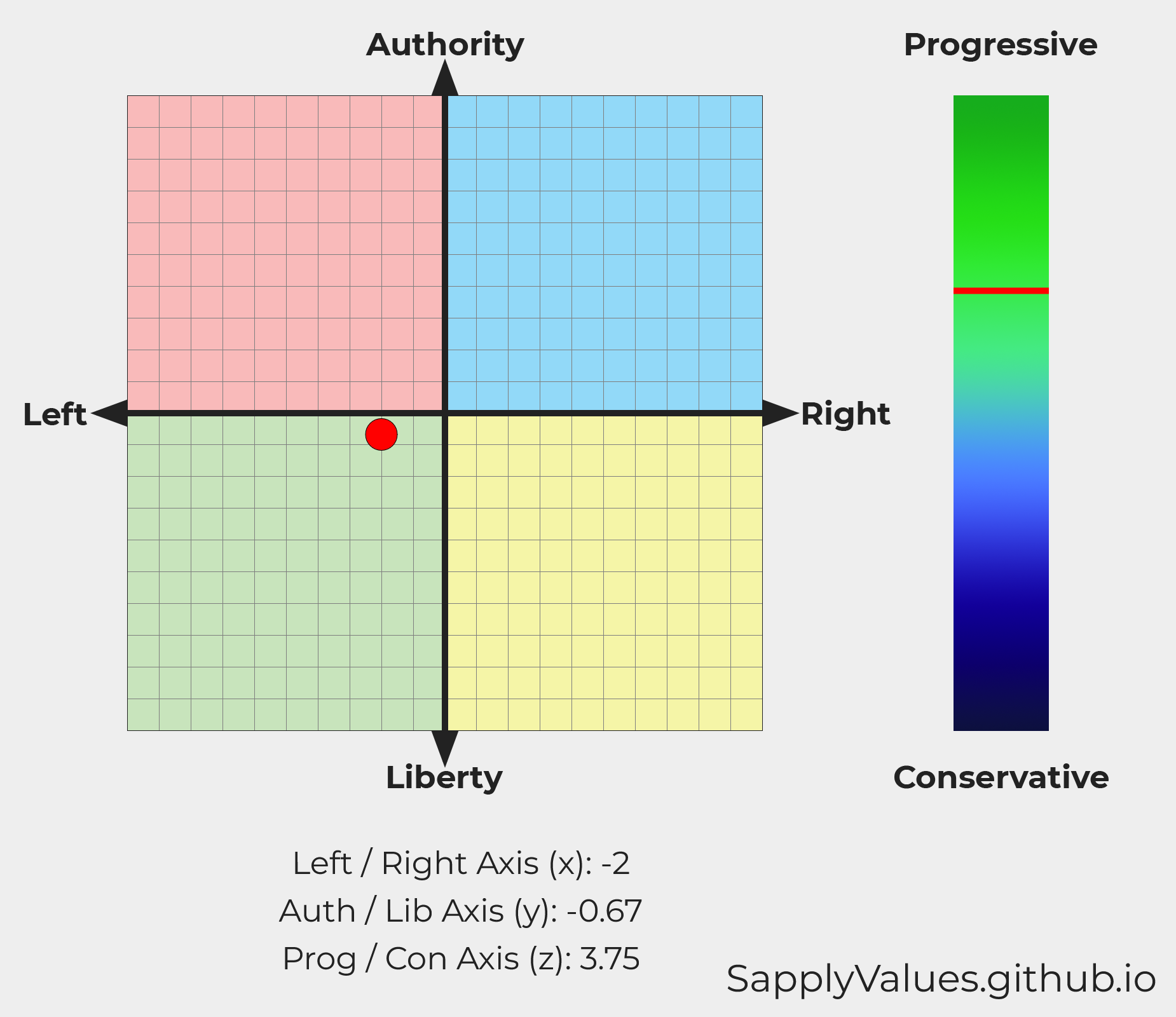
I have been anti-woke and anti-SJW since my late teens. I consider myself as someone with heterodox moderate-leftist views. I would generally describe myself as closer to the left than the right overall, based on Political Compass and SapplyValues tests. Economically, culturally and ideologically, I am not really aligned with the right. (Below is my SapplyValues political result.)
Critical Theory
What “wokeism” really refers to, is a school of thought based on critical theory, a social, political and philosophical framework that analyses structures and systems based on oppression and perceived injustice. This was developed by the Frankfurt School in the 1920s. The academic thinkers who founded critical theory were influenced by Freudian psychoanalysis and Marxism. Throughout the 20th century, ideas like deconstructionism, social constructionism, and intersectionality bore out of this framework. This is where woke ideas come from. There’s an entire academic framework behind them.
Prominent thinkers associated with critical theory include Marcuse, Adorno, and Foucault. These thinkers pushed ideas that one could easily dub historical revisionism, and founded what one could describe as cultural Marxism. Cultural Marxism is not a “far-right conspiracy theory”, it’s a legitimate academic term used by scholars like Douglas Keller.
Cultural Marxism differs from orthodox Marxism, in that it applies the Marxist critique of power structures to cultural orders, like patriarchy. Orthodox Marxism focuses on economics, not race and gender. While Marxism is an economic theory that examines how workers are oppressed by capitalism, cultural Marxism takes this one step further and analyses how various cultures can oppress different groups, such as racial oppression (critical race theory), gender oppression (feminism), and sexual oppression (queer theory).
So what’s wrong with all this?
Historically Inaccurate
Well, for starters, it is simply historically inaccurate. It’s an incredibly reductive way to view history, and reeks of historical revisionism. Claiming that the entirety of human history is a story of rich white males oppressing everyone else is a blatant lie. It’s not even true of the last few hundred years, considering the Ottoman Empire fell in the early 20th century.
Human history is a story of bloodshed, and to blame all of this on white men is just untrue. It doesn’t account for formidable women, like Boudicca, Catherine the Great, or the bloodthirsty Mary Tudor. It doesn’t account for the Byzantine Empire, the Akkadian Empire, the Egyptian Empire, the Japanese Empire, or the Mali Empire, which at one point was ruled by the incredibly wealthy Mansa Musa. Literally every social and racial group has been “oppressed” at some point historically. This is what humans do: divide, conquer, rule. If anything, we are fortunate to live in the present, where the world is far more peaceful and stable than it has been for a long time, if ever.
The idea of women having always been “oppressed” is something I talk about frequently on my YouTube channel, as this is the crux of feminism. Humanity never would have been able to flourish and progress if the bearers of children were being oppressed. That’s not a stable way to raise a family. 99% of human history consisted of us being hunter-gatherers. For the rest, we have been farmers, then industrial workers, and now office workers. Throughout this, men and women have worked together to raise children. Gender roles were about division of labour. Feminism is a lie, folks.
Everything is Offensive
The biggest issue I have with cultural Marxism/critical theory/woke ideology is that it operates like a religion. It assumes the moral high ground. In the present day, we forget that human morality has been constantly evolving. What we consider abhorrent today was fine a thousand years ago. We should take a contextual look at things that happened in the past, rather than an emotive one.
For example, the film Gone With the Wind is often hated by the woke because it is said to be glorifying the “Deep South” and depicting a time that is now, quite literally, gone with the wind. It’s set in the backdrop of the American Civil War, when the North conquered the South and the South lost their slaves.
We should look at Gone With the Wind as capturing a genuine moment in time. This stuff really happened and we can’t ignore it. If anything, we should learn from the mistakes of the past.
More to the point, when you put all this aside, it’s simply a beautiful film. Scarlett O’Hara is a fantastic character, a brilliant anti-heroine. She and Rhett Butler make for a timeless classic.
The novel It by Stephen King (which I recently read for the second time) is a beautiful piece of literature. It’s a fantastic coming-of-age horror novel based in both the 1950s and the 1980s. And during 1950s America, black people unfortunately were referred to as “niggers” or “negroes”. There’s no way around that. It would be dishonest to write a book about that time period and not include these words.
I could see that book not being published today, not least because of the above, and because there are numerous jokes about Stanley Uris’ Jewish heritage that would be marked as “antisemitic”. (They are clearly not; Stanley is as much in on the jokes as the others.)
This, to me, sounds a lot like the Hays Code that regulated American films from 1934-1968. It’s just an attempt to morally police art based on what a small body of elites dub “acceptable”.
I can totally understand renaming Agatha Christie’s novel from Ten Little Niggers/Indians to And Then There Were None. This I do agree with. There is no need to have a book labelled with the former title.
But do we really need an entire preamble before the Community episode “Advanced Dungeons and Dragons” because we see thirty seconds of a narcissistic Asian guy with his face painted black to masquerade as a dark elf?
Do we need content guidelines for old Disney films? I think not. These films are for children. I really don’t need to watch Aladdin with a side of “this contains harmful outdated stereotypes.” It’s a fun children’s film, and Aladdin and Jasmine are clearly portrayed as good characters while Jafar is an arsehole.
Diversity vs Wokeism
Not everything that features ethnic minorities or LGBT characters is woke. There are plenty of films out there that comment on the persecution of racial minorities: Lagaan, American History X, This is England, Disney’s The Hunchback of Notre Dame. These films are not woke. They’re providing constructive cultural commentary, but they present it in a well-rounded manner. It’s not trying to prove a point through virtual signalling and moral policing. It simply presents itself well. Not every story about gay people is pushing cultural propaganda. It could just be telling a story.
This is like saying that any film about women is feminist. The Women (1939), Gilda (1946) and Gentlemen Prefer Blondes (1953) are all Old Hollywood films about women, yet they’re not really feminist. Feminist doesn’t mean “any story about women”, any more than woke means “any story about black people.” I wouldn’t call It a “woke” novel for featuring a black, Jewish, and female character as part of its ensemble cast. It really isn’t very woke at all.
This always makes me think of my own fiction, and to what extent politics has influenced them. I published all my books in my early twenties, and with the exception of Tic Tac Toe, which is strongly anti-woke, none of my books deliberately push a political message. They’re more coming-of-age stories. Because of my interest in politics since my teens, there probably will be some commentary in the background. But I wouldn’t call it the entire story.
My romance books as Diana Vale are really a cultural commentary on Gen Z, and a lot of the stresses we are under, such as mental illness. Several of the books are about gay men, but m/m romance is a popular niche that has been going on for years. Is that woke? I’m not entirely sure. I think women like to fantasise about gay men the way men enjoy lesbian porn.
One could push this even further and say white men are being woke when they watch black women in pornography. But that’s pushing the ridiculousness of this all even further. (And actual woke people would probably label that as racial fetishisation, something which literally everybody does. Wouldn’t that be kink shaming? Where’s the line, eh?)
Ultimately, being genuinely open-minded and interested in different cultures isn’t the same as being woke (to use the term in its modern pejorative sense). I have friends and family of various racial backgrounds, religious beliefs, and some who are LGBT. Does that make me woke? Am I woke for publishing a novel where the main character was a black lesbian?
I don’t think so. To me, woke is about being overly offended and angry at something for no reason. A woke person, for example, would call JK Rowling far-right and compare Trump to Hitler. Woke people generally don’t listen to reason and common sense. They take the moral high ground in any social discussion.
One can be a liberal or left-wing without being woke. Someone who isn’t woke would see JK Rowling as a rational adult with an opinion they may or may not agree with.
Whether or not you think I’m woke depends on your view of wokeism. I concur you to watch some of my videos, read my articles, and then make that decision for yourself.
In the spirit of things, check out a video of mine here: